Showing posts with label gluten free. Show all posts

Saturday, December 5, 2015

irina's borscht


Over the long Thanksgiving weekend, I had the pleasure of spending time with a friend who hails from Russia. When I asked him about delicious vegetarian recipes from his homeland, he mentioned his mother's borscht. He spoke of its richness and the deep color and said that there are two steps that make hers special.

Boiling potatoes to thicken the broth.
One is Zakvaska. To make it, grate 1/3 of the beets going into the soup, saute until very soft and dark with garlic and then add vinegar, bringing out and setting their color. This in turn is added to the soup towards the end of the cooking process and ensures the deep, vivid color of the final soup. The other step is to boil a couple of peeled potatoes into the broth, remove, mash and add back in to the soup. This ensures that the soup will have extra body and thickness.


I helped him make this amazing vegan soup one cold Northern California evening, and then ate as much as I was allowed, and then was sad to see it go. The second time I made this soup I doubled the recipe and not even that lasted very long. This soup makes me feel like I am fortifying my blood.

The lovely Pasha
Borscht is best served hot on a cold day with plain yogurt, sour cream, or with a vegan cashew-lemon-dill sour cream and crusty bread for dipping.


IRINA'S VEGAN BORSCHT

Veggies
3 TBS olive oil
3 small onions, chopped
3 stalks celery, cut into matchsticks 1 inch long
3 large carrots, cut into matchsticks 1 inch long
4 small tomatoes, cut in half (or one can diced tomatoes)
2 lbs red beets, cut into matchsticks 1 inch long

Broth
7 cups vegetable broth (home made, or use bouillon cubes)
2 bay leaves
4 cloves
1/2 teaspoon black pepper
1 lb potatoes, peeled and cut into large chunks
salt

Zakvaska
1 TBS olive oil
1 lb red beets, grated
5 cloves garlic, minced
1/2 cup vinegar (ACV, white, or red)

This is a two pan process.

In a large soup pot, pour a few glugs of olive oil and heat until it begins to shimmer. Add the onions and cook for a few minutes. Then add the carrots and celery and cook for another few minutes until soft and beginning to caramelize. Add the julienned beets and cook until the beets begin to soften.

Meanwhile, in a separate soup pot, put the broth (or water and bouillon cubes), cloves, pepper, bay leaves and potatoes. Simmer until the potatoes are soft and easy to pierce. Remove the potatoes and mash with a fork (or use a ricer like I did), and set aside. Pour the broth into the beets, carrots and celery, and add the diced tomatoes. Cover and simmer for 20 minutes.

Now make the Zakvaska. While the soup is simmering, pour a bit more oil into the second pot and add the shredded beets with the remaining garlic. Cook over medium low heat until the beets are soft and dark in color, about 5--10 minutes. Once done, add the vinegar. Continue to heat and stir for a moment. This creates a delicious element that Pasha and I agree would be great as a stand alone condiment on bread or crackers.

Once the soup has been simmering for 20 or so minutes, add the mashed potatoes along with the shredded beet/vinegar blend. Stir and continue to simmer for another 15-20 minutes. Taste and salt.

Serve hot, with a dollop of yogurt, sour cream or vegan cashew sour cream. I am a lover of fresh herbs, so I felt it necessary to add a sprig or two to mine as garnish.

Finally, please check out these HOT COP oven mitts. Pasha & Ryan are men of high class & taste.


Monday, November 23, 2015

game changing grilled kale


I cannot stress enough how much I love this stuff.  Dress it up or eat it straight off the stems with your hands, oil dripping down your chin. I don't really want to eat kale any other way these days. This recipe's chewy, smoky, juiciness satisfies me at a very primal level.


Plan on one bunch of kale per person. You'll want to fire up your barbecue for this one.

GAME CHANGING GRILLED KALE

1 bunch of kale (curly is awesome but any will work)
3 cloves garlic
1/4 cup oil (avocado, sunflower, olive are my faves)
1 tsp salt
1/2 tsp black pepper
1 lemon

Wash, drain and place the kale in a large bowl. In a blender, blend the garlic, oil, pepper and salt together. Pour over the kale and toss to coat.

Over low heat, place the kale leaves on the grill. Cook for a couple of minutes and flip, and cook for a couple of more minutes on the other side, until the leaves are soft and edges starting to char just a little bit. Don't over-grill, as the burnt ones aren't as awesome to eat.

Remove from the grill. Squeeze lemon juice over leaves and go to town.


Another way to serve is to chop the leaves off the stems and make a salad.
This one is quite amazing.


Thursday, November 12, 2015

kelewele bites

photo by kelly bone

My current assignment is to come up with creative and attractive African inspired appetizers for an event. The first thing that came to mind was kelewele (pronounced kelly-welly), a dish that I know and love from years living in Ghana, West Africa.

West African plantains are the best I've ever had. They're spiked with ginger, garlic, hot pepper and salt. In Ghana they're deep fried but I like to coat and roast. If you cut them into skinny little discs and stack them up on a toothpick they are transformed from humble nighttime street snack to high class cocktail party item.

KELEWELE
  • 3 lbs ripe sweet plantains (skin black if possible) sliced into 1/8"-1/4" rounds
  • 1/4 cup avocado oil (or other oil)
  • 4 ounces fresh ginger
  • 3 ounces fresh garlic
  • 1-2 habanero peppers
  • 1/2 tsp salt
Preheat the oven to 375F. Place the plantains in a mixing bowl. In a blender, combine oil, ginger, garlic, peppers and salt. Blend until smooth, and then pour over the plantains, stirring to coat well. Allow to marinate for at least 30 minutes.

Spread plantains on a parchment lined baking sheet (or two) in an even layer. Roast for about 20 minutes, until edges begin to caramelize. Using a spatula, flip them and continue to roast until they are golden brown and caramelized. Stir once or twice during the process to prevent the outer pieces from burning. 

Once cooked, remove from oven. These are best hot but still taste good even as they cool down. If you are serving them as an appetizer, spike three to a toothpick and arrange on a plate with a dusting of sea salt, garlic chives and aleppo pepper.

Wednesday, November 4, 2015

vegan mushroom cioppino


Hi, I'm back! I've been cheffing and managing for a vegetarian restaurant these past two years, and my musings have been posted elsewhere on the web. 

Speaking of musings, I am going to keep my future posts short and sweet. I usually scroll right down to the bottom of most food blogs, skipping the novel that precedes the recipe. I find all that writing to be superfluous. In addition, in writing less words, the likelihood of my sharing recipes and other useful information will be greater.

So, without further ado, I would like to share with you the recipe for this vegan mushroom cioppino, a standout soup that was originally created in the late 1800s by Italian fishermen in San Francisco. This version swaps oyster and trumpet mushrooms out for the seafood. I am a big fan of my food processor and used the slicing attachment for the leeks, trumpet mushrooms, garlic, fennel, celery and tomatoes. I suggest you do the same if you have the luxury, its a real time saver.

Omnivores and vegetarians alike go bonkers for this amazing vegan soup, which was in regular rotation at the caffe. Enjoy!

the ingredients

VEGAN MUSHROOM CIOPPINO
Makes about 12 servings (can easily be halved)
  • 1 pound royal trumpet mushrooms, ends removed and sliced into bite sized pieces.
  • 1 pound oyster mushrooms, ends removed and torn into bite sized pieces
  • 1/2 cup olive oil
  • 3 stalks leeks, tough green ends removed, rinsed & thinly sliced (see bottom pic)
  • 18 cloves sliced garlic
  • 2 cups fennel, sliced thin
  • 1 bunch celery, sliced thin
  • 2 cups dry white wine
  • 8 cups water
  • 1 vegetarian bouillon cube
  • 2 1/2 lbs chopped tomatoes
  • 2 teaspoons salt
  • 2 teaspoon white pepper
  • 3 tablespoon Old Bay seasoning
  • 1 teaspoon red pepper flakes
  • Fresh oregano, chopped

In a large stock pot, heat the olive oil until it ripples. Add the leeks, celery and garlic, and brown for 3 to 5 minutes. Add the sliced mushrooms and continue to brown (another 3 to 5 minutes)
Stir in the fennel, then the wine. Let the wine come to a boil, then simmer for 2 minutes.
Add the water and bouillon cube, tomatoes, salt, pepper, chili flakes and Old Bay. Simmer for 30 minutes on low until the mushrooms are tender and the fennel is soft. Remove from heat and add a small handful of chopped fresh oregano. Taste and adjust seasoning.
 

Ladle into bowls. Drizzle with olive oil and serve with sourdough bread

Quick tip for cleaning leeks I learned from David Lebovitz: slice lengthwise up to the root,
making them very easy to rinse off. Then slice as needed.

Thursday, December 6, 2012

poha deluxe


Hi there...how are you? 

Me, I'm great. Have been forgoing the joy of blogging about food and am starting to realize the error in my ways. I eat amazing vegetarian food every single day here in India. One of my 'justifications' is that millions of others do too, and there are about a bajillion Indian vegetarian food blogs out there to satiate the masses. But this is mine, and if for no other reason, I realize that a personal record of my eatings and cookings is in order if for none other than myself.

And you, my dear reader.

What have I been doing with my days? I am here working on a large scale student/community driven mosaic mural at an international school in Northern Mumbai. I spend most of my time (well, I did, but now we are almost finished!) at the school working on the project. Visit my art blog (link is in the side bar) for lots of details and pics. Here is a pic of the almost complete piece:


The rest of my time is spent with friends, new and old. Cooking, eating & drinking. Shopping. Exploring. Visiting nature spots around the city and enjoying the sounds of silence. Which is the best antidote to a city like Mumbai, I have to say.

who's that creepy lurker?

I have bought a couple of cookbooks, and I go to peoples houses and help cook food. I take pictures and jot down recipes. I basically do everything a good food blogger is supposed to do except for the most important thing: blog. So there is a backlog of posts for me to catch up on. But then I think...there are a million recipes for this already on the web so why bother? And then I remember that no two things are the same. And that if I post something I just might turn one or two people onto something awesome that they otherwise might not ever learn.

Enough of my self-justifying rambling. Enter poha. This is another Indian convenience food, normally enjoyed for breakfast. Mumbaikers eat this all the time. For all you cats outside of India, you'll have to take a trip to an Indian market and buy poha, which is precooked, flattened and dry rice. It is a flaky cereal that can easily be reconstituted with a sprinkling of water. It is then seasoned and lightly cooked with a few simple ingredients to create this delicious and quick meal.


left: dry poha.                                                               right: puffed moist poha.

While you are at the Indian market, go ahead and pick up a couple of other awesome staples. For poha you want curry leaves, mustard seed, turmeric, cumin seeds, mustard oil, coconut oil, and green chillis.
And while you are there, just because they are delicious (but not necessary for this recipe) grab some jaggery, black salt, papad, dosa batter, and a block of paneer.

I have been experimenting with all sorts of different oils here, and have landed on a hands-down favorite. I love to cook in a blend of coconut oil and mustard oil. The coconut oil has a lovely flavor, very high smoking point and smooth finish. Mustard oil lends a sharp bite and color to the mix. The combination of these two oils, especially when tempered with mustard and cumin seeds results in a frothy, rich and downright yummy base in which to cook your food. It is ambrosia. 

best flavors in the kitchen: onion, garlic, ginger and hot peppers

Back to poha. I have eaten it multiple times here. Then, I asked people how they made it. Finally, I looked at some recipes on the web. Then I went ahead with my own version. This is what I am offering you now. I call it poha deluxe because I, in true veggie voyager style, always add lots of extra veggies to my recipes. Enjoy!


POHA DELUXE
  • 2 cups thick (not thin) poha, dry
  • water
  • 1 TBS mustard oil
  • 1 TBS coconut oil
  • 1 tsp mustard seeds
  • 1/2 tsp cumin seeds
  • 1 cardamom pod, crushed and skin removed
  • 1 tsp turmeric powder
  • 6 or so curry leaves (if you can't find these, no big deal)
  • 1 tsp red kashmiri chili powder
  • 1 onion, diced
  • 5 cloves garlic, minced
  • 1 thumb fresh ginger, peeled and chopped or grated
  • chopped hot green chillis to taste
  • salt to taste (I like black salt these days)
  • Chopped veggies of your choice. I used 1 large carrot, 1 small sweet potato, 1 tomato, and some small green vegetables whose name evades me. You can use anything you like: zucchini, cauliflower, potato, mushroom, bell peppers, etc.
  • chopped fresh coriander (cilantro)
  • dahi (plain yogurt)

Place the poha in a strainer. Pour distilled water over it to wash and moisten it. Allow to sit for 5 minutes until it is puffy. Sprinkle more water on if necessary. Do not overstir or overmoisten, as you want to keep the shape of the poha. Set aside.

In a skillet over medium-high, heat the mustard and coconut oil. When hot, add the mustard seeds and allow to crackle for a few seconds. Add the cumin seed and sputter for a few more seconds. When the ambrosia smell comes up, add the curry leaves, onion and then the garlic, and ginger. When this is translucent and golden, add the rest of the spices and the chopped veggies. Reduce heat and sauté until the veggies are tender. I like to add the tomatoes in last to retain their fresh, juicy nature.

Now add the moistened, puffed up poha. cook a couple minutes longer, gently stirring to mix while not destroying the poha. If it is too dry seeming, sprinkle a SMALL amount of water and gently mix. Salt to taste. The poha should be golden yellow, speckled with mustard seed and vegetables.

To serve: garnish with a small handful of chopped cilantro and a dollop of fresh yogurt.


Wednesday, June 13, 2012

fingerling potato salad, turkish style


Today, I had a lovely, relaxing day. I accidentally stumbled into the Goleta farmer's market this morning, on our last day here on this visit. In addition to some stellar stone fruits and strawberries, I picked up a couple pounds of fingerling potatoes, dreaming of a bright, flavorful Turkish style potato salad featuring olive oil, lemon juice and fresh parsley.


Before I started my cooking spree, however, I took another long walk through the butterfly sanctuary up the road, out to a breezy bluff overlooking a clear ocean with oodles of seaweed traipsing through the waves. It was idyllic.


Then, I came back, polished up the mosaic one last time and got cracking in the kitchen. One coconut-strawberry tart and one delicious potato salad later, I sit here and write before we begin the 4 hour journey home.

Enjoy this fresh, bright, tasty salad. It tastes like summer.


fingerling potato salad, turkish style

  • 2-3 lbs fingerling potatoes
  • 1/2 onion, thinly sliced
  • 6 cloves garlic, chopped
  • 1/2 cup parsley, chopped fine
  • 1 large tomato, seeds removed and chopped
  • Juice of one lemon
  • 4 TBS olive oil
  • 2 TBS apple cider vinegar
  • 1 tsp herbes de provence
  • 1 tsp salt
  • fresh black pepper
  • cayenne pepper

Boil the potatoes whole, until al dente, then drain and let cool. Saute the onions and garlic in a pan with a little oil to soften. When the potatoes are cool to the touch, slice in quarters or bite sized pieces. Add the parsley, tomato, garlic, onion to the potatoes in a large bowl. Whisk together the lemon juice, olive oil, vinegar, herbes de provence, salt, black pepper and cayenne pepper and add to the potatoes. Season to taste with more salt and fresh black pepper. Let sit for a while for the flavors to mingle. Serve at room temperature or chilled.

Monday, June 4, 2012

Savory Basil, Tomato & Zucchini Muffins (GF)


Hi there!

Has it really been over two weeks since I last checked in? I guess I needed a vacation from the land of blogging. No, I'm not throwing in the towel. Just trying to figure out a way to keep this sustainable and interesting (to me and you) for the long haul. Sometimes I wish that I had created a broader theme for my blog, as food is only one of the things I am consumed by. Can I talk about things other than food here? Like mosaics, solar eclipses, and other wonders of the world? I wonder...


For this post, however, I will continue to ruminate on the subject of edibles. I was leafing through the cookbook put out by Béa of La Tartine Gourmande, whose blog is gorgeous, inspiring and utterly delicious. She has in her book a recipe for savory muffins which seemed like such a good idea to me that I rushed downstairs first thing this morning to make a veggie voyager version. I have to say, these are super tasty and a great on the go option for those who don't want to have a sweet breakfast. I made a big batch of batter, scooped out a dozen mini muffins without cheese, and then added 1/2 cup of grated cheddar cheese into the other half. Both were great. The cheese ones were off the hook. A spicy element would have been good too. Next time, I think I'll do a version with jalapeño, cheddar and cilantro.


Savory Basil, Tomato & Zucchini Muffins (GF)


  • 3 small zucchinis, chopped small or grated
  • 1/2 cup sun dried tomatoes, chopped
  • 1/3 cup chopped fresh basil
  • 1/2 cup shredded cheese (your choice, and optional) 
  • 1 cup almond pulp (or flour)
  • 1 cup amaranth flour
  • 1 cup quinoa flakes
  • 1 tsp baking powder
  • 1/2 tsp baking soda
  • 1 tsp salt 
  • 1/2 cup olive oil
  • 1/2 cup almond milk (or buttermilk)
  • 3 large eggs (or 1/2 cup flax meal)

Preheat oven to 400F.

Combine dry ingredients in one bowl. Combine wet ingredients in another bowl. Mix together, and then add vegetables and cheese if using. Scoop into muffin moulds, and sprinkle with fresh cracked black pepper. Bake for 15-20 minutes, or until they are firm to touch and golden brown on the tops. 

 
Bon apetit!

Sunday, May 20, 2012

GF almond doughnuts


This post is dedicated to the hard work of other amazing food bloggers. I love the vibrant, prolific exchange of creative energy and knowledge that is happening out there in cyberspace. I love being a small part of it, as well.

When I saw this recipe, I had Ryan order me a silicone mini doughnut pan and went out to buy the necessary ingredients. I finally got around to making them this morning, and true to their word, they are fluffy and light and moist. The recipe comes from the phenomenal gluten free food blog Gluten Free Girl and the Chef. I love her recipes; the ingredients she uses align perfectly with my tastes and she puts most other GF versions to shame. She writes cookbooks with her chef hubby and they have a very sweet story, which is intertwined into each post in a lovely way. She seems to know her stuff, or at least has advanced far in her journey.


Anyhow, she (her name is Shauna Ahern) posted a recipe for these almond flour doughnuts, very closely adapted from another website called Roost. This is another lovely blog to explore, with recipes and tidbits of information. Coco of Roost seems to be the original author of this interesting, easy and delicious recipe.


The version I made was closer to the gluten free girl's as I added powdered ginger and lemon zest. I didn't have honey so I added 1/4 cup of sucanat and a little bit of water to get the mess going in the blender. For a glaze I simmered 1/4 cup of almond milk, a few drops of almond extract, 2 cups of sucanat and a pinch of salt. After removing the doughnuts from the pan, I dipped them in the glaze and let them cool. Ryan came in with a chocolate glaze that we then dipped in coconut which was also divine.


I usually use my leftover almond pulp for baking recipes, and I think I shall try the next time with it, but for this time, I went out and bought almond flour, as I really wanted to honor the original recipe, to see just how fluffy they really were. I was not disappointed. They are seriously good.
 

Here is the original recipe: Roost 
Here is the recipe I used: Gluten Free Girl and the Chef

Tuesday, May 15, 2012

lemon rice with beet curry


This is a tasty combination we enjoyed recently, when I had a fridge drawer full of beets and a hankering for an aromatic, flavored rice dish. Remembering that lemons and beets pair nicely, I decided it would be worth a try.

It was, combining complex flavors in a simple recipe. You've gotta love those Indian spices. Paired with tangy yogurt and fresh cilantro, this dish is a no-brainer.

Healthy choices always at the forefront, I used brown basmati, which also loaned a nutty element to the dish. I was inspired by this beet recipe, which adds besan (chickpea flour) to the recipe before serving. This adds nutritional value, flavor and texture to the curry. Yum!


lemon rice
  • 2 cups brown basmati rice
  • 4 cups water
Cook the rice in a rice cooker or on the stove. You want a dry, fluffy rice rather than a sticky rice. Set aside.
  • 1 lemon, zested and juiced
  • 1 tsp mustard seeds
  • 1 tsp black lentils
  • 1-2 hot green chillies (Indian, serrano or jalapeno), minced
  • 1/2 tsp turmeric powder
  • 1/4 tsp asafoetida (if you've got it)
  • 4-5 curry leaves or 1 bay leaf
  • 1 TBS grapeseed oil or other cooking oil
  • salt to taste

In a large wok, heat the oil. Add the mustard seeds and wait for them to begin popping. Then add the chillies, lentils, asafoetida, curry leaves and turmeric. Fry for a minute longer to release the aromatics of the spices, and then add the rice, lemon juice, lemon zest. Stir to combine, salt to taste.

besan-beet curry
  • 6-8 beets, boiled or roasted and then peeled and chopped into bite-sized pieces
  • 1 onion, chopped
  • 1 TBS garlic paste or 4 cloves garlic, minced
  • 1/2 cup besan (chickpea flour)
  • 1 TBS mustard seeds
  • 1 tsp cumin seeds
  • 1-2 hot green chillies (Indian, serrano or jalapeno)
  • 1/2 tsp turmeric
  • salt to taste
  • Oil for cooking
  • Plain yogurt & chopped fresh cilantro (coriander)

In a large wok, heat the oil. Add the mustard and cumin seeds and allow them to brown and begin popping. Add the onion, turmeric and hot peppers. Then add the beets and stir will. Add the besan, sprinkle with a couple of tablespoons water and continue cooking and stirring until the raw flavor of the besan goes away. Salt to taste.

For a groovy dome-shaped service, choose a round bowl of your preferred serving size. Fill the bottom third with beet curry and the rest with lemon rice. Press down firmly, put a small plate on top and flip over. Carefully remove the bowl, and top with plain yogurt and chopped cilantro. Bon appétit!

Sunday, May 6, 2012

playing with idli


One of my first posts on the veggie voyager was for a South Indian staple called idli. I have since mentioned idli multiple times, as it is a traditionally gluten free food that is easy to digest and a tasty vehicle for sauces, chutneys and other delicious dishes (usually Indian, I suppose).

A few months ago I invested in an idli steaming pan from our local Indian grocery store. For a while there I was buying premade idli batter, which is sold in plastic tubs. It is an easy, convenient way to have fresh idli at home, but I was curious about learning to make this dish from scratch.


I have since learned that the process is very easy, as long as you think ahead. All you have to do is soak lentils, rice and fenugreek seeds (separately), blend them (separately), combine, and leave overnight to ferment. The resulting bubbly goodness is a tangy batter that can be spooned into the idli pan and steamed up. Idli are tangy, spongy and delicious.


left to right: rice, quinoa, green lentils & chickpeas;
black rice & brown lentils;
brown rice & urud dahl

The other good news is that this batter, if thinned a little bit with water, can be used to make dosa as well, which you all know is a food I love very much. Dosa are a little more difficult to perfect though, as I especially like mine to be paper thin and dry, and the dosa I've made at home so far are more spongy  than I like. I am working on it though...


the three batters:soaked, blended and ready to ferment.

Because we like to experiment, we decided to try idli using different types of lentils and pulses. Our three experiments were: brown basmati rice and urud dahl (almost a standard, traditional idli), brown basmati and quinoa with green lentils and green chickpeas, and for the third, black rice and dark brown lentils. To the green version we also added spirulina powder and cilantro. The black rice batter got the addition of fresh ginger. After blending, this one morphed into deep purple.

Each was good. The green ones and the white ones won the contest, although we might not add spirulina again. I liked the purple idli but Ryan was not a fan. Our guests really enjoyed the novelty of the different colors and flavors. The traditional, white batter made the best dosa, followed by the green. As dosa, the purple batter was not quite as successful.


I am a firm believer in the wonders of traditional dishes that happen to be gluten free by virtue of their very existence. One does not need to settle for icky, stiff store-bought GF bread or $15 frozen GF pizzas when there are recipes out there that need no xanthan gum or tapioca starch to make them work for you. The fact that these are fermented is an added bonus: fermentation makes food more easily digestible, nutritious and in my humble opinion, better tasting.

If you'd like to experiment, the proportions remain the same, but the types of beans and grains change. All have fenugreek, which is a common Indian spice. Have fun...be wild! If you don't already have one, I hope you will add an idli steamer to your kitchen collection, it's fun to play with...

We invited friends over and enjoyed our idli (and dosa, and rice) with chana masala (chickpeas), baingan bharta (eggplant), aloo gobi (potatoes and cauliflower), mango chutney, cilantro chutney, tamarind chutney, and dahi (Indian yogurt). It was a feast fit for royalty. The chana masala was off the hook. I followed the linked recipe to the tee. I highly recommend that you try it.


Idli

  • 3 cups rice, or combination of rice and quinoa (brown rice, black rice, red rice, etc all should work)
  • 1 cup dahl or lentils (urud dahl is traditional, but depending on color and flavor you can experiment here)
  • 1 tsp fenugreek seeds

Put the rice in one bowl, the dahl and fenugreek seeds in another, cover each with water. Soak overnight or for 6-10 hours. Next day, blend the dahl with a small amount of the soaking water until it is smooth, like shampoo. Transfer to a large bowl. Blend the rice up until it is also quite smooth (but not completely) and add it to the dahl mixture. Stir, cover with a towel and leave to ferment overnight. 

In the morning, the batter should be bubbly and tangy smelling. Stir to combine (it will have separated) and place in the fridge until you are ready to use.

Using a paper towel dipped in oil, lightly oil each idli tray. Fill the compartments, stack the tray and place in a large pot with a lid, with about 1 inch of water in the bottom. Cover and steam for 15-20 minutes, or until the centers of the idli are firmed up. Turn off the heat and allow the idli to sit for 20 minutes or so before using a rubber spatula to scoop each idli out of the tray. Arrange on a plate and serve with sambar, chutney or other sauce.

Wednesday, May 2, 2012

gluten free chia-flax-rice roti


While in India, every time I had a wheat based dish I'd start thinking about how when I got back to San Diego that I'd make a gluten free version of whatever I was eating. I had all kinds of ideas. I still do, so stay tuned for veggie voyager versions of all kinds of stuff.


This is my first contribution to the GF Indian flatbread family, and certainly not the last. I am looking forward to trying some Tibetan steamed bread recipes in the near future.

Chapatti and Roti are unleavened flatbreads traditionally made using whole wheat flour and cooked on a flat skillet called a tava. In some parts of India, hardly a meal is eaten without chapatti or roti.


We are staying with dear family/friends in Goleta, CA, just north of Santa Barbara. We are here to visit, to see Steve Martin play his banjo, plan another mosaic project, and eat good, healthy food.

of course, being californian, some of us did it taco style...

When I planned to make this meal, I didn't even realize that I was making a GF version of Camel Safari Masala, until Ryan pointed it out to me. I made a masala with brussels sprouts, black eyed peas, and cauliflower florets. It was tasty alongside cilantro chutney, raw mango chutney and fresh plain yogurt.

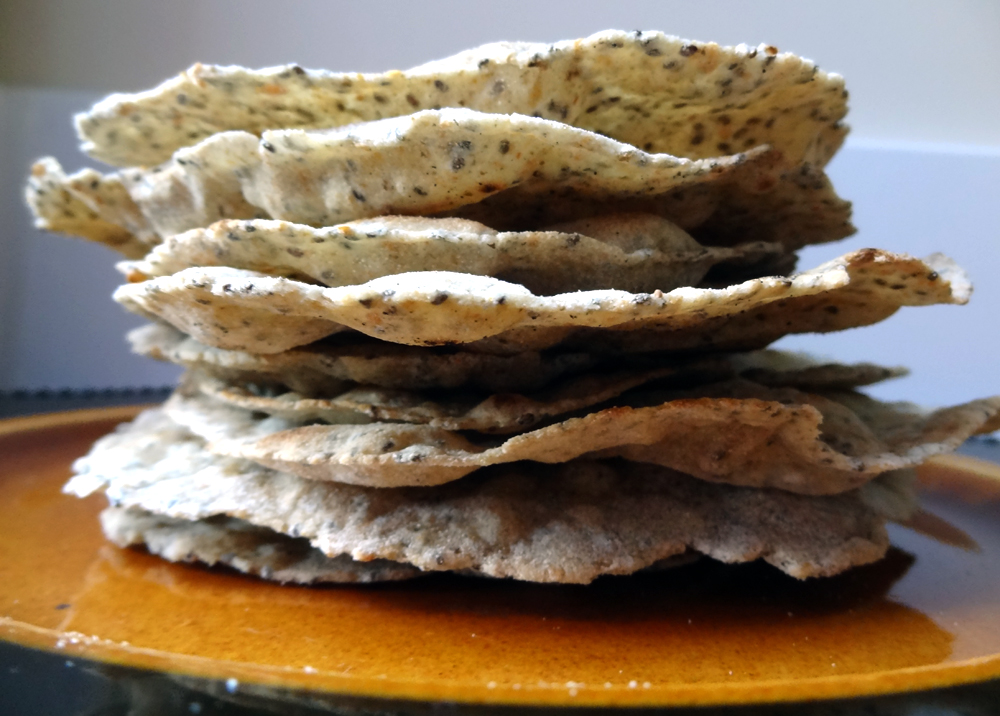
These flatbreads are a slightly pliable but not quite as soft as wheat based chapatti or roti (which are basically the same thing). The rice flour results in a slightly drier, crispier bread that is less heavy than its wheat-based relative. They are speckled throughout with chia seeds. They are perfect for conveying morsels of the masala over to the mouth region. I did not use a recipe per-say, but I will walk you through the process so you can enjoy them at home.


GF Chia-Flax-Rice Roti

  • 2 TBS chia seeds
  • 1/2 cup flax meal
  • 2 TBS oil of your choice (I used olive)
  • 2-3 cups rice flour (I like brown rice flour)
  • 1 tsp salt
  • 1/4 cup of water or so

Combine the chia seeds, flax meal, oil, salt and water. Add one cup of rice flour and mix. Continue mixing and adding rice flour a little bit at a time until the dough forms a ball. Knead the dough as you would a wheat dough, adding small amounts of rice flour to prevent it from getting sticky. When the dough is elastic and smooth, create a log that is about 1 1/2 inches in diameter and 1 foot long. Cut this log into sections that are about 1 inch wide. Using your fingers, press each section into a flattened disk. Dust each side with rice flour and roll out using a rolling pin on a flour dusted surface until you have a thin, round sheet, not unlike a tortilla. Heat a skillet and rub with a small amount of oil. In India, they take a half potato or onion, stab it with a fork, dip the flat side into oil and use that to oil the pan. You don't need much oil if any at all for this, just an initial amount to help start the process. When the pan is hot, add one roti and cook until it begins to blister. Flip and continue cooking until it is cooked to your liking. Set aside and continue with the rest until you have a delicious stack of crispy roti. Enjoy with masala, curry or chutney.
ready for rolling out.

Tuesday, April 24, 2012

Vegan Pesto with Pepitas


 I have to say, San Diego is full of hidden gems. It's good to be home for a while.
 
This past weekend, as Ryan was finishing out the 10 day master cleanse, my mom and I found ourselves poking around in the corridors of a restaurant supply store, shopping for rice noodles and fresh coconut at 99 Ranch, the biggest pan-Asian supermarket in San Diego, and eating fluffy uttapam and paper-thin dosa in Little India. While there, we tucked into Bombay Bazaar for some Indian staples, and finished up the day with a stop at a place called "The Fruit Stand". It was a fun day, completely centered around the subject of food. So much for me doing a "cleanse" at this juncture...


The restaurant supply store was fun. There are two on the same block. One is always closed on weekends, but F.S.E., Inc. is open on Saturdays. Most of their products really are for industrial kitchens, but they do carry some fun stuff, including cheap fiestaware and other fun dishes. You'll probably see pictures of some of them with food in them on this blog, at some point. This is one of those hidden gem-poke around and maybe you'll strike gold types of places.

me mum with our loot

If you live in or are visiting San Diego, I highly recommend a visit to the Indian shopping center known as Little India, on Black Mountain Road just off Miramar Road. In Little India, you will find several Indian eateries, a yoga/meditation center, a Hindu temple, a large grocery store, a bank, a travel agent, and a fantastic clothing store/herbal beauty salon that will thread your eyebrows for $9. (I can fully recommend the services.)

While there, we ate lunch at Cafe Madras, an unpretentious eatery that has a South Indian menu of dosa, idli, and uttapams, which are a thick dosa-like pancake that has pieces of cilantro, tomato and onions studded throughout. And just like a restaurant of its ilk in India, each table had stainless steel cups and pitchers of water already set. It was tasty and the dosas were proper. I have had better sambar, but considering that two months ago I didn't even know what sambar was, I'll cut them some slack. For those of you who don't know, sambar is a ubiquitous lentil soup that is always served with dosa, idli, utthapam, and wada, alongside coconut chutney. Usually sambar is highly spiced and very flavorful. There was also an all you can eat buffet that included an endless stream of waiters bringing more dosas and idli as long as the person was eating. Next time! I had the vegetable utthapam and my mom had a masala dosa. I love this simple, classic, traditionally gluten free food. In fact, I think that dosa is one of the greatest things on earth. It is a food with immense potential.

After lunch, eyebrows, and a general stocking up of Indian groceries, we headed over to The Fruit Stand. This is a really cute place that sells mostly local and organic (and pesticide free) produce at very good prices. It is just south of the Costco on Morena. We bought fresh organic basil, and at $1 per bunch, how can I not make pesto? 


This recipe is an old standard of mine. I first learned to make pesto similar to this when I was a teenager working in a café downtown San Diego. We used walnuts instead of expensive pine nuts, and we used parmesan cheese. These days, I replace the parmesan with nutritional yeast, and use whatever nuts I want. I am particularly fond of pepitas, or pumpkin seeds. If you have a food processor, then this recipe is super quick and easy. Simply pinch the leaves off the basil stems, toss everything in the FP, and blend away. You want a textured pureé, not a smooth pureé. This is why the FP is better to use than a blender. I have read that proper, true pesto is best made with a mortar and pestle, but I would be surprised if very many of you were going to that route. This pesto is excellent with on a bagel or toast with fresh tomato slices. It is also great as a pasta sauce or on a pizza. I like to have it on hand all summer for all my pesto needs. Whenever I can get my hands on fresh basil, you know I've got pesto in the fridge.


Basil Pesto With Pepitas
(makes about 1 cup)
  • 4 cups loosely packed basil leaves (no stems)
  • 1/2 cup pepitas or pumpkin seeds (walnuts or pine nuts will work as well)
  • 1/4 cup olive oil
  • 1/4 cup nutritional yeast
  • 3 cloves garlic
  • salt & freshly ground pepper to taste
Whirl in a food processor until it reaches your desired texture. If it seems too dry, slowly drizzle in more olive oil. If it seems too oily, toss in another handful of nuts (or more basil). Adjust for salt and pepper.
You could also add olives for a tapenade-pesto blend, or sun-dried tomatoes for another flavor alltogether. Sometimes I make it spicy...